The AI Export-Control Battle Is Moving From Chips to Server Racks
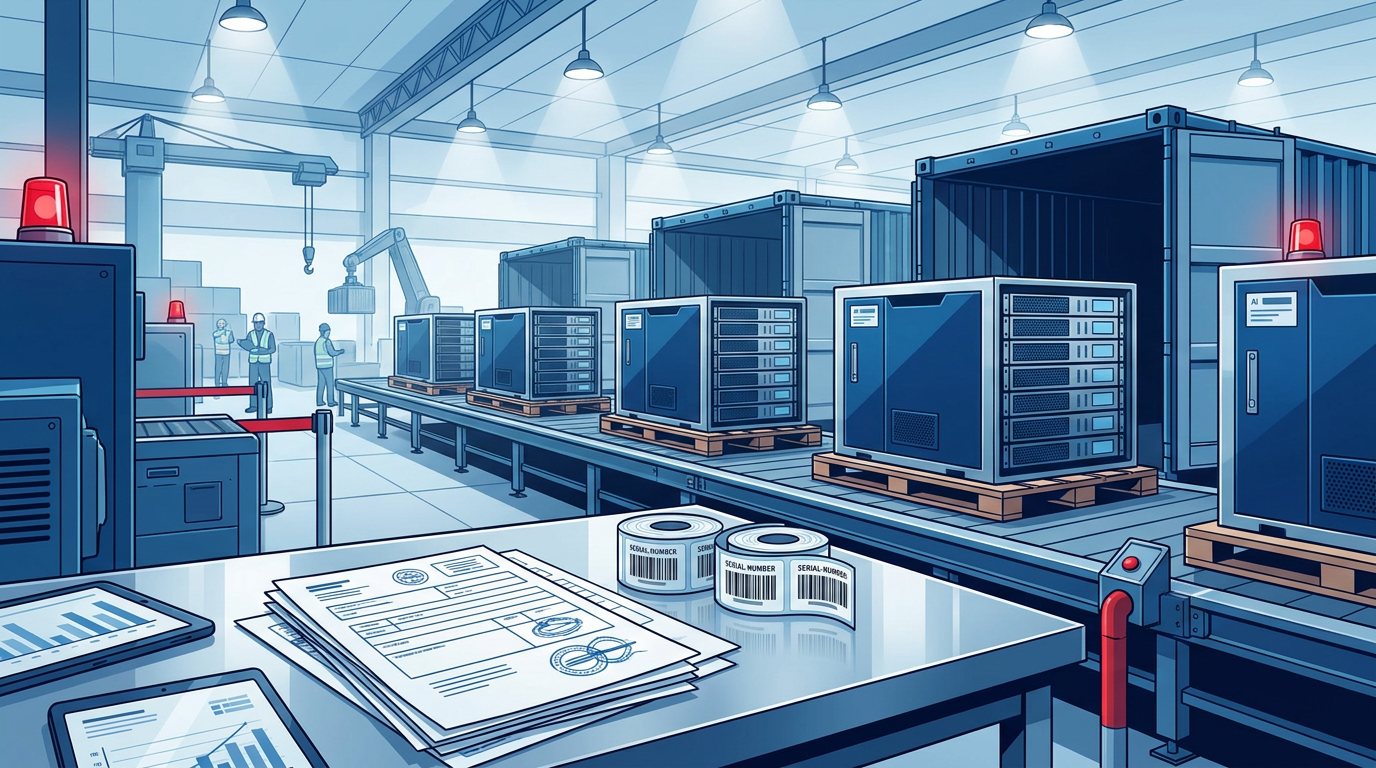
The most important unit in the AI arms race is no longer necessarily the chip. It may be the rack: a finished, tested and network-ready assembly that bundles scarce processors with memory, interconnects, cooling and power systems. As governments tighten access to advanced computing, enforcement is moving downstream—from semiconductor specifications to the companies, documents and shipping routes that turn silicon into usable intelligence infrastructure. From component controls to system controls Taiwanese authorities have indicted nine people over the alleged unlawful export of AI servers to China, according to [Reuters](https://news.google.com/rss/articles/CBMitwFBVV95cUxORUFqODhsNEhfOVR2RWdNdXd1LVI2REthVUgzaU4zdXNIa2RlZmdSTXVwemR6ODVzUm1mMmtOZ0FRR3FEbVp6YWlTbDZmcm1nLTdQcFFkcWhVTTBvMkJ4dDh2blB2NkswdzZTbEFGWEZ2c3Nwam9aWXREYmhVR0wzQzdSdVoxUThYa0VrcFI4R0VKaWk2SDVFNmJUaVFuZ1Z2Nmhha21pSWxaRm1rQklZWm83aUNhbjg?oc=5). The allegations have not been proven, but the case illustrates how export restrictions are becoming an operational concern for the entire hardware chain. Early semiconductor controls could be understood largely as a product-screening exercise: identify a processor, compa